

Introduction
If you’ve ever seen your pet trembling, hiding, or pacing during a thunderstorm or fireworks, you know how heartbreaking it can be.
Pets experience loud noises much more intensely than humans. The sudden crashes of thunder or bursts of fireworks can trigger deep anxiety — especially in dogs, cats, and even small animals like rabbits or birds.
The good news? You can help them feel safe, calm, and comforted — with patience, preparation, and a few simple techniques.
Why Pets Get Scared of Loud Sounds ?
Animals have much sharper hearing than humans.
A sound that seems “moderate” to us can feel overwhelming to them — especially unpredictable ones like thunder or fireworks.
When pets can’t identify where the sound comes from or why it happens, they may interpret it as danger.
This triggers their “fight-or-flight” instinct, leading to:
- Trembling or shaking
- Pacing or hiding
- Excessive drooling
- Barking, whining, or howling
- Loss of appetite or restlessness
Understanding this natural reaction helps you respond with empathy — not frustration.
Step 1: Create a Safe Space
Before the storm hits or the fireworks begin, prepare a quiet, cozy safe zone for your pet.
For dogs:
- Set up a crate or corner with blankets and toys.
- Add something that smells like you — a worn T-shirt can be very comforting.
- Keep curtains closed and lights dimmed to block flashes of lightning.
For cats:
- Let them hide in their favorite small space (under the bed, behind furniture).
- Don’t try to pull them out — just make sure they can access food, water, and a litter box.
For rabbits or birds:
- Cover part of their cage to reduce visual stress.
- Move the cage away from windows and close doors to minimize sound echoes.
🧺 Tip: White noise or soft music helps mask scary sounds and creates a calming atmosphere.
Step 2: Stay Calm Yourself
Pets are experts at reading human emotions.
If you act anxious or nervous, your pet will pick up on that energy and feel worse.
Try to:
- Speak softly and calmly
- Move slowly — avoid sudden gestures
- Sit near them without forcing cuddles
Sometimes your quiet presence is all they need to feel safe.
Step 3: Use Distraction Techniques
When the noise starts, gently redirect your pet’s attention:
- Offer a treat puzzle or a favorite chew toy.
- Play soft background sounds like rainfall or low TV volume.
- Engage in a calm game if they’re willing (like gentle fetch indoors).
🧠 The goal isn’t to eliminate fear instantly — it’s to teach your pet that loud sounds don’t always mean danger.
Step 4: Comfort — But Don’t Over-Reassure
Many owners rush to cuddle their pets when they’re scared, but too much “poor baby” attention can accidentally reinforce fear.
Instead:
- Be present and calm.
- Allow contact if your pet approaches you first.
- Maintain your normal tone — loving, but steady.
If they seek comfort, pet them gently. If they hide, let them stay where they feel secure.
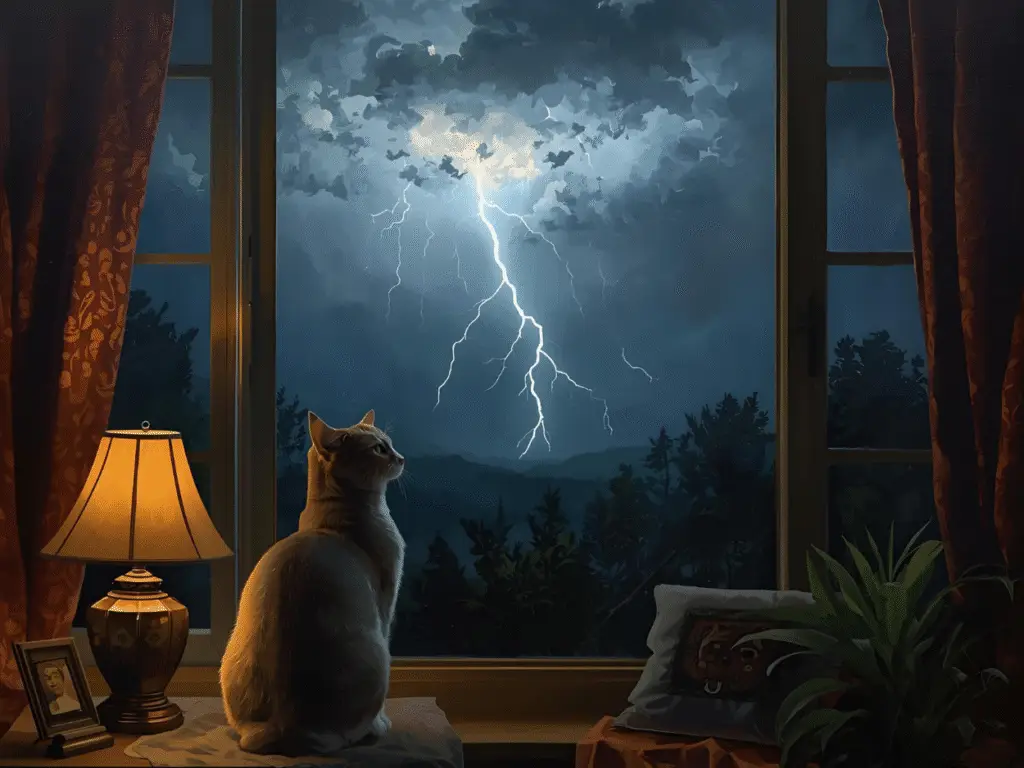
Step 5: Mask the Noise
Use background noise to muffle external sounds:
- Turn on a fan or air purifier.
- Play gentle music (classical, soft jazz, or even YouTube “calming for dogs” playlists).
- For severe anxiety, consider a white-noise machine.
🐕🦺 Studies show consistent background sounds can reduce stress by helping pets tune out sudden noises.
Step 6: Desensitization Training (Long-Term Calm)
After storm season, help your pet build confidence gradually:
- Play low-volume recordings of thunder or fireworks.
- Reward your pet with treats for staying calm.
- Slowly increase the volume over weeks.
This teaches your pet that loud noises = safety and rewards, not danger.
Patience is key — never rush the process.
Step 7: When to Consult a Vet
If your pet’s fear becomes extreme — like self-injury, refusal to eat, or panic attacks — talk to your veterinarian.
They may recommend:
- Calming pheromone diffusers
- Anxiety wraps or vests (like Thundershirt)
- Natural supplements
- In severe cases, short-term anti-anxiety medication
Never give your pet human medication — only use vet-approved solutions.
Step 8: Routine, Love & Reassurance
Most pets recover quickly once the noise stops, but a few may stay jumpy for hours.
Stick to your routine, feed them normally, and show affection calmly.
Consistency builds trust — and trust is the strongest medicine against fear.
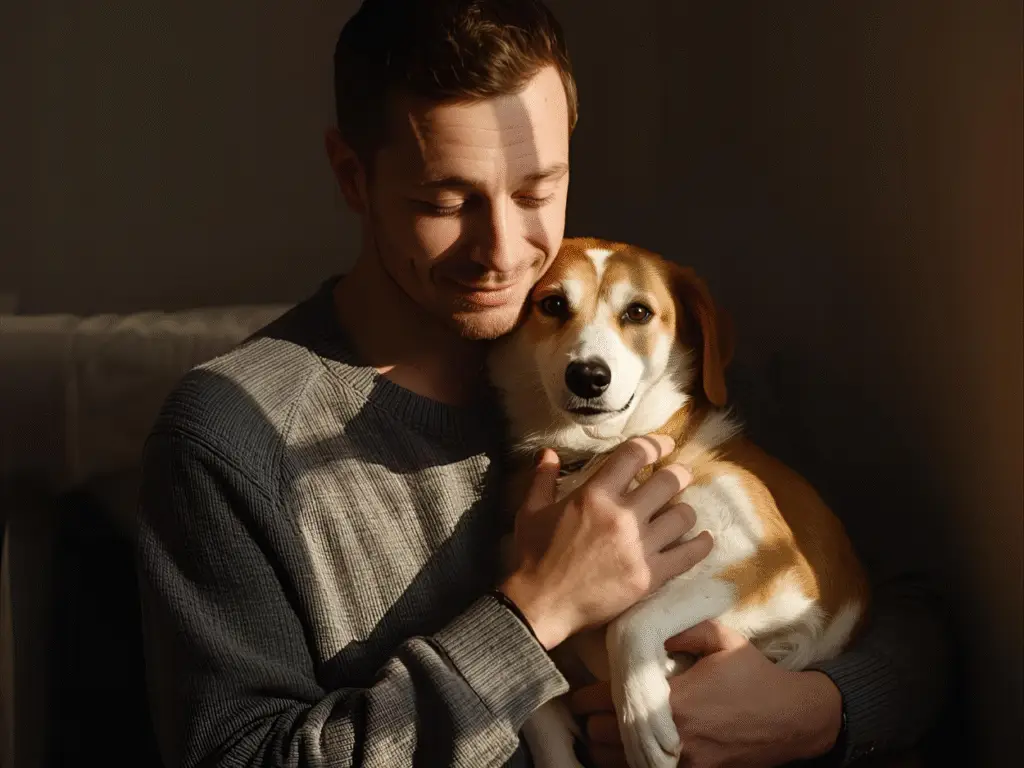
Final Thoughts
Helping an anxious pet is about patience, not perfection.
Your gentle tone, predictable routine, and calm energy are the best gifts you can offer.
Remember: every time your pet looks to you for safety — and finds it — that bond grows stronger. 💞
Even the loudest thunder can’t shake the quiet love between you and your furry (or feathery) friend.
[…] Related: How to Calm an Anxious Pet During Storms or Fireworks […]