Introduction
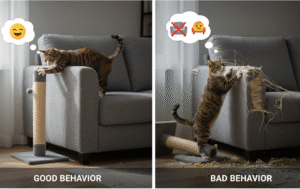
Even the most loving, well-cared-for cats can develop behavior problems — from scratching your couch to refusing the litter box. The good news? These behaviors often have simple causes and fixable solutions. Understanding the why behind your cat’s actions is the key to restoring harmony in your home.
Why Behavior Problems Happen
Cats don’t misbehave out of spite. Most issues come from either medical causes or environmental stressors.
- Medical Causes: Pain, thyroid issues, urinary tract infections, or arthritis can cause sudden behavioral changes. Always rule these out first with a vet visit.
- Environmental Causes: Changes in routine, new pets, boredom, or lack of stimulation can cause stress that leads to unwanted behaviors.
💡 Pro Tip: If your cat’s behavior changes suddenly, assume it’s a medical issue until proven otherwise.
The Most Common Cat Behavior Problems
1. Litter Box Avoidance
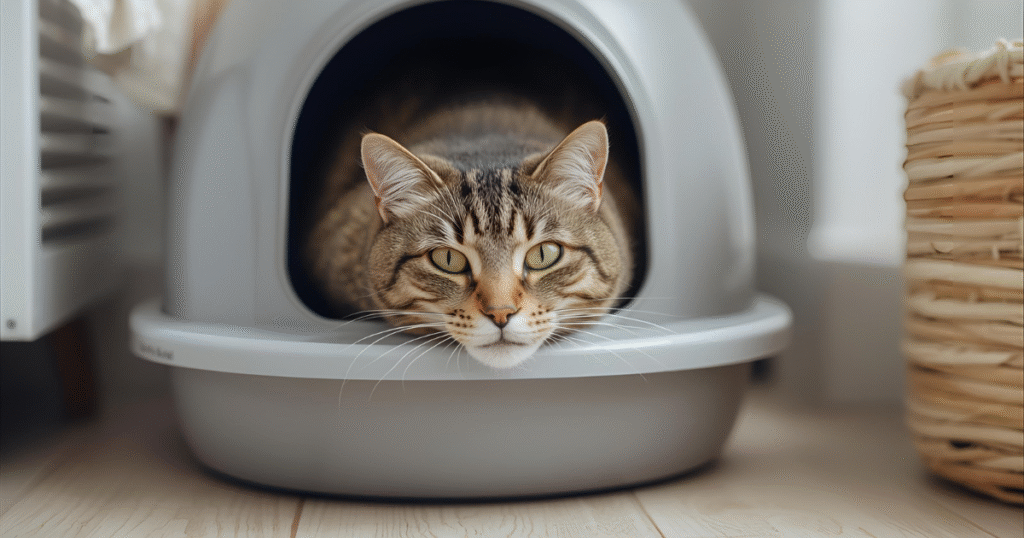
This is the #1 complaint among cat owners. Common reasons include:
- Dirty or poorly placed litter boxes
- Stress or anxiety
- Medical conditions like urinary tract infections
2. Scratching Furniture
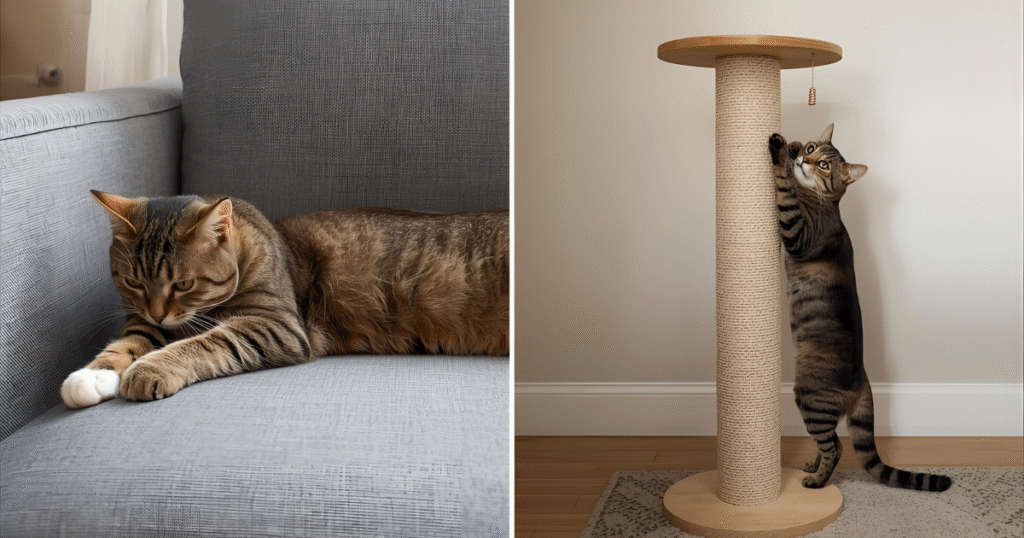
Scratching is a natural behavior — cats do it to stretch, mark territory, and maintain claw health.
To redirect:
- Provide multiple scratching posts (both vertical and horizontal).
- Place them near favorite furniture.
- Use catnip sprays to encourage use.
3. Excessive Meowing or Night Activity
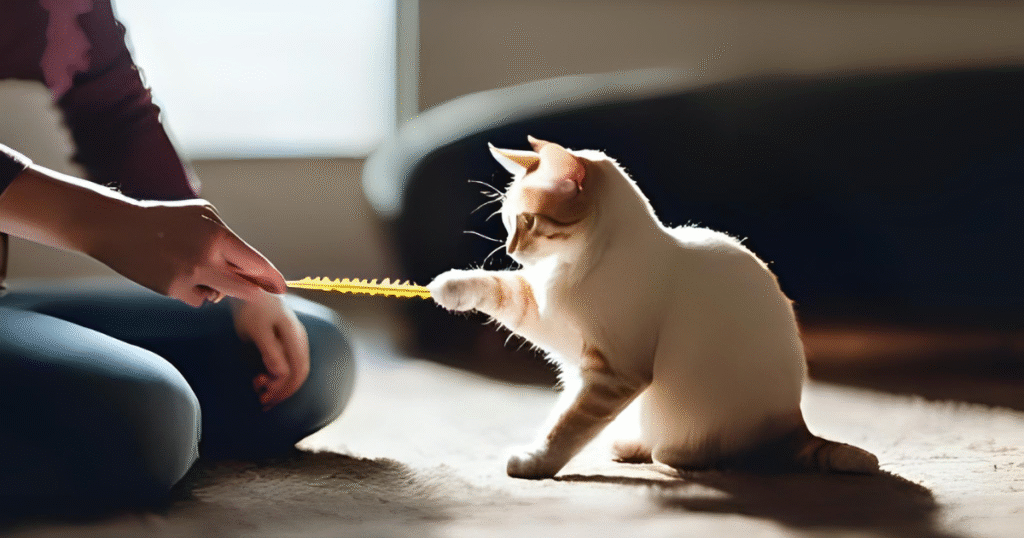
Cats are crepuscular — most active at dawn and dusk. But if your cat is waking you at 3 a.m., they may be bored or hungry.
Solutions:
- Schedule evening playtime before bed.
- Feed the final meal right before you sleep.
- Ignore attention-seeking meows; reward calm behavior instead.
4. Aggression Toward Humans or Pets
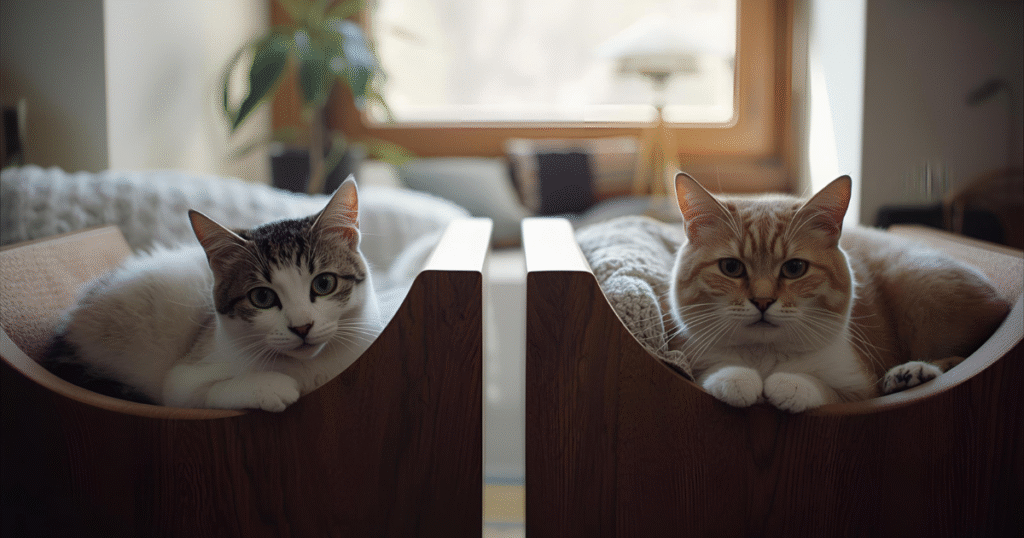
Aggression can stem from fear, frustration, or redirected energy.
- Avoid physical punishment — it increases fear.
- Redirect with toys and provide vertical territory.
- Gradually reintroduce cats if they’re fighting.
If aggression persists, consult a certified cat behaviorist.
How to Prevent Behavior Problems
- Keep routines consistent.
- Provide daily play and enrichment (puzzle feeders, climbing trees, toys).
- Offer safe spaces where your cat can retreat.
- Always use positive reinforcement — never scolding.
When to Seek Professional Help
If behaviors are extreme — biting, urinating outside the box frequently, or self-harming — consult your vet or a Certified Applied Animal Behaviorist (CAAB).

Conclusion
Cat behavior problems are often signs of unmet needs, not bad temper. By understanding your cat’s instincts and environment, you can correct most issues gently and effectively — and build a stronger bond in the process.
FAQs
Q1: Why does my cat scratch the couch even with a scratching post?
Your post might not be in the right place or the right texture. Try placing it where your cat scratches most and use catnip to attract them.
Q2: What’s the best way to stop litter box accidents?
Keep the box clean, quiet, and accessible. Try different litter types to find what your cat prefers.
Q3: Can stress cause bad behavior in cats?
Absolutely. Moving, new pets, or loud noises can all trigger stress behaviors like overgrooming or aggression.