
Introduction
Your pet speaks a language without words — one made of tail wags, ear twitches, blinks, and sighs.
Understanding your pet’s body language is one of the most important ways to build trust, strengthen your bond, and keep them happy and safe.
When you can read the subtle signals — the relaxed tail, the cautious posture, the slow blink — you’re not just watching behavior; you’re listening to their emotions.
This guide explains how dogs and cats communicate their feelings through posture and movement, and how you can respond calmly and appropriately.
Why Body Language Matters in Pets
Pets don’t speak our language, but they communicate their feelings constantly. Every movement — tail, ear, or whisker — tells you something about what they’re experiencing.
When you understand their body language, you can:
- Prevent fear or aggression before it starts
- Strengthen trust between you and your pet
- Recognize stress or pain early
- Create a calmer, safer environment
Related: How to Calm an Anxious Pet During Storms or Fireworks
Reading Dog Body Language
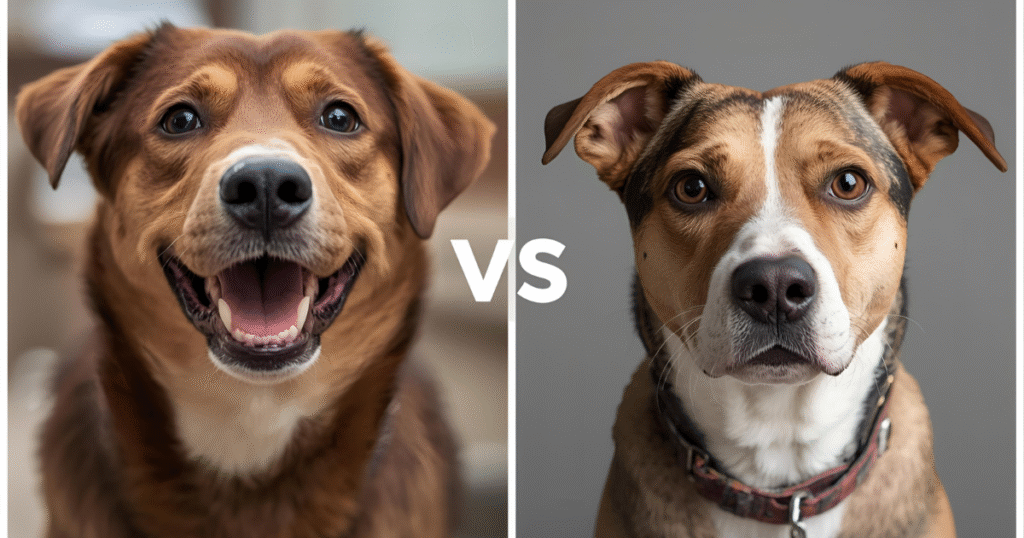
Dogs express emotions through posture, eyes, tails, and ears. Here’s what their common signals mean:
Relaxed and Happy
- Tail wagging slowly or at mid-height
- Ears in a natural position
- Soft eyes and gentle mouth
Meaning: Calm and content
Alert or Curious
- Ears forward
- Eyes wide open
- Tail straight or slightly raised
Meaning: Interested or investigating something
Anxious or Fearful
- Tail tucked
- Body crouched or turned sideways
- Lip licking, yawning, or avoiding eye contact
Meaning: Uncomfortable or nervous
Aggressive or Defensive
- Tail stiff and upright
- Ears pinned back
- Growling or showing teeth
Meaning: Feeling threatened or defensive
Dogs often give multiple signals at once, so look at the full context. A wagging tail doesn’t always mean happiness if the rest of the body is tense.
External reference: American Kennel Club: Dog Body Language Guide
Reading Cat Body Language
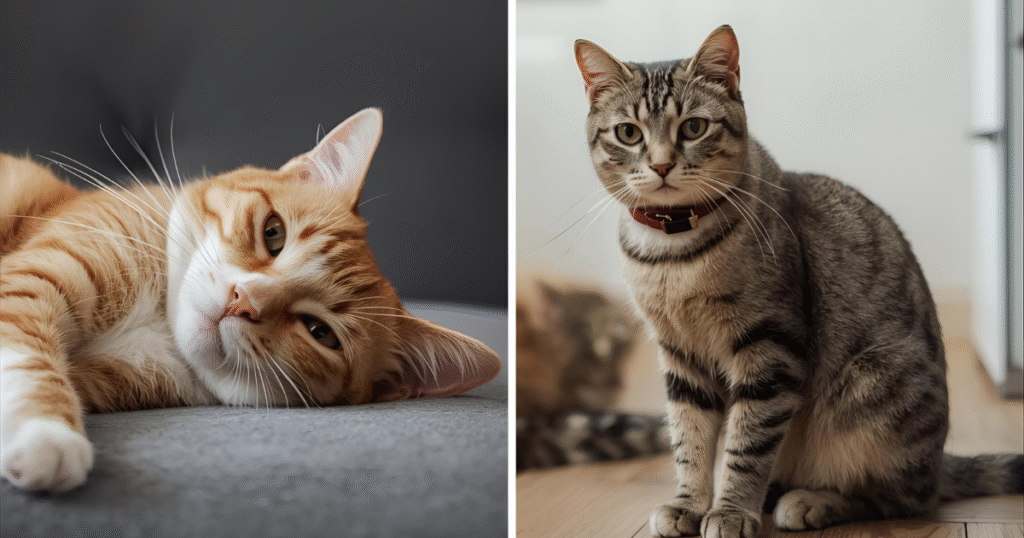
Cats are more subtle, but their bodies are just as expressive. Their tails, ears, and eyes reveal how they feel.
Relaxed and Content
- Tail upright or loosely curved
- Ears forward or relaxed
- Slow blinking or half-closed eyes
Meaning: Feels safe and comfortable
Playful or Curious
- Tail swishing gently
- Ears alert
- Pouncing or crouching
Meaning: Engaged and ready to explore
Anxious or Irritated
- Tail flicking quickly
- Pupils dilated
- Low growl or twitching skin
Meaning: Frustrated or overstimulated
Fearful or Aggressive
- Tail puffed up
- Ears flattened
- Hissing or striking
Meaning: Scared or defensive
A cat’s slow blink is a sign of relaxation and trust. Try blinking slowly back to show affection.
Related: How to Make Your Cat Feel Loved and Relaxed at Home
How to Respond to Your Pet’s Signals
Understanding is only half the equation. Responding calmly helps your pet feel secure.
For Dogs
- Use a calm, steady tone
- Avoid sudden movements when they’re tense
- Reward calm posture instead of fear-based behavior
For Cats
- Let them approach you first
- Speak softly and avoid staring directly
- Don’t touch or pick up a cat that shows irritation
When you match your energy to your pet’s, they learn to see you as safe and supportive.
When Behavior Changes Suddenly
If your pet suddenly becomes fearful, aggressive, or withdrawn, it may not be behavioral at all.
Pain or illness can cause sudden changes in posture or mood.
If your pet’s behavior shifts dramatically, schedule a veterinary visit to rule out medical issues.
Related: How to Keep Your Dog Happy and Healthy Every Day
Building a Stronger Bond Through Observation
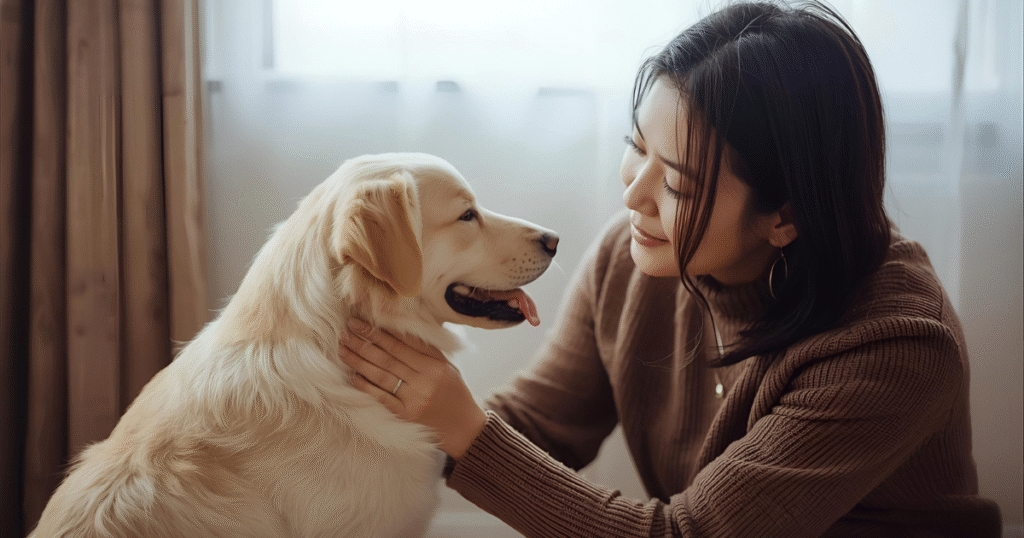
Spend a few minutes every day simply watching your pet.
Notice how they move, where they rest, and how they breathe.
These quiet observations help you anticipate their needs and emotions. Over time, you’ll develop a deeper understanding — the foundation of a true bond based on trust and empathy.
FAQs: Understanding Pet Body Language
Why does my dog lick me constantly?
It can mean affection, submission, or attention-seeking — watch their body posture for context.
What does a cat’s slow blink mean?
It’s a sign of relaxation and trust. Slowly blink back to communicate calmness.
Why does my dog yawn even when not tired?
Yawning can be a calming signal or a sign of stress relief.
How can I tell if my pet is scared?
Look for tense body posture, tail tucked, flattened ears, or avoiding eye contact.
My cat’s tail flicks fast — what does it mean?
Usually irritation or overstimulation — it’s best to give your cat space.
Conclusion
Your pet’s body is a map of emotions. When you learn to read it, you unlock deeper communication and connection.
A wagging tail, a slow blink, or a calm stretch all tell you one thing — your pet trusts you.
By slowing down and observing, you begin to understand their world, not just as an owner, but as a true companion.